By Farheen Fahad
Bismillah
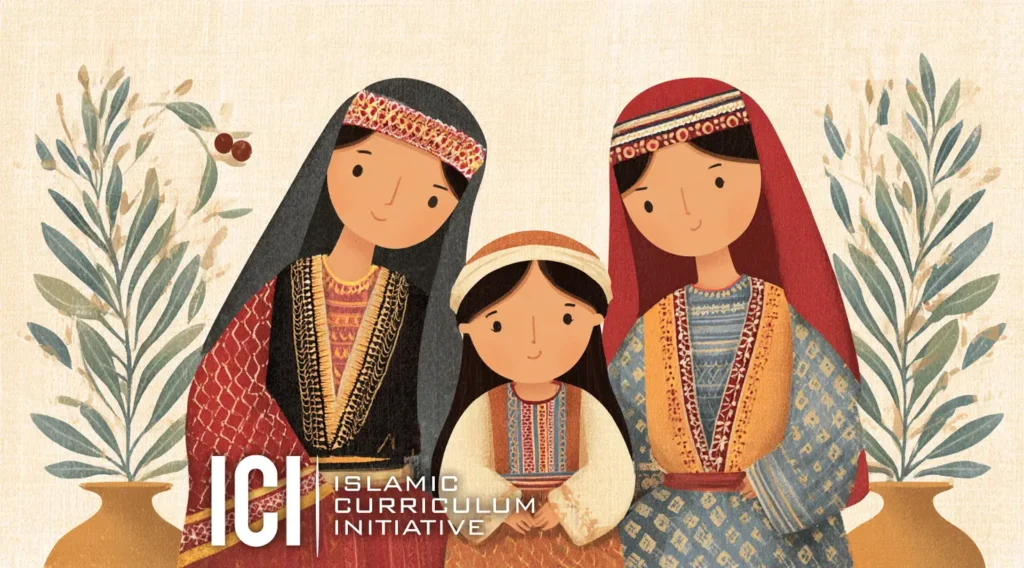
I had the privilege of delivering a lesson on Palestinian traditional dresses, on behalf of Manzil School in Pakistan, through ICI’s special program, The Ramadan Connect, to the students of Next Generation School via an online platform.
The lesson plan, designed by ICI, had a profound impact on both the students and me. Rich in history, culture, and art, the lesson served not only as a means of learning about attire but also as a powerful introduction to Palestinian identity, values, and resistance.
The presentation began by highlighting the significance of traditional attire before delving into the specifics of Palestinian dresses.
Additionally, I discussed the role of the keffiyeh (headdress) in Palestinian history, particularly its symbolism as a marker of solidarity and resistance. The iconic checkered pattern, now recognized worldwide as a symbol of Palestinian pride, was a key point of discussion. The students learned how these garments serve as a means of cultural preservation, even amidst displacement and political struggles.
I also explained how each region of Palestine has its own distinct embroidery, patterns, and colors—collectively called tatreez. These designs reflect local customs, traditions, and even the surrounding environment. The intricate tatreezpatterns are deeply connected to the land and its heritage.
We explored how Palestinian traditional dresses, such as the thobe, are not as commonly worn as they once were. However, the tatreez patterns continue to be preserved in other forms, with their intricate embroidery and meaningful symbols standing as a testament to the resilience and strength of the Palestinian people.
Overall, it was a meaningful session, and I was thrilled to see the students engage with the history. It was a reminder that clothing is far more than just fabric—it is a means of preserving identity and a symbol of cultural pride.
Furthermore, I found the ICI lesson plan to be comprehensive and well-designed. ICI’s educational material is a powerful tool, and translating these resources into Urdu ensures that the message of Palestine reaches a wider audience. This initiative empowers communities to take meaningful action and reinforces the idea that the struggle for Palestine is not just a regional issue but a global Muslim cause.
I am grateful for the opportunity to share this aspect of Palestinian culture with the students. I hope it sparked in them a greater appreciation for the diverse cultures that enrich our world.
Farheen Fahad
Headmistress
Manzil Educational Organization
Karachi, Pakistan
Ramadan 1445